

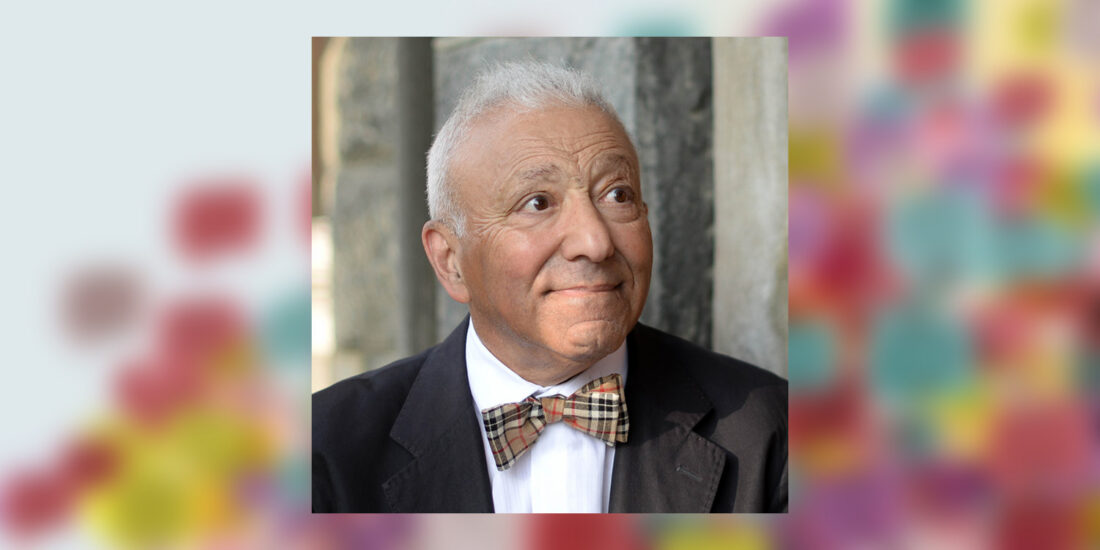
Professor Fathali M. Moghaddam of Georgetown University, United States, will present ‘The Psychology of Democracy and Democratic Backsliding’ at The 12th Asian Conference on Education & International Development (ACEID2026), The 16th Asian Conference on Psychology & the Behavioral Sciences (ACP2026), and The 12th Asian Conference on Aging & Gerontology (AGen2026).
Professor Moghaddam is a leading expert in the field and has published extensively on intergroup relations, the psychology of democracy and dictatorship, and subjective justice, currently holding an h-index of 67. His keynote will explore pro-democracy solutions to the democratic backsliding we are currently experiencing in the 21st century.
This keynote presentation will be held online, available to live-stream for online delegates. To participate in ACEID/ACP/AGen2026 as an audience member, please register for the conference via the conference website.
The presentation will also be available for IAFOR Members to view online as part of their membership benefits. To find out more, please visit the IAFOR Membership page.
Speaker Biography
Fathali M. Moghaddam
Georgetown University, United States
 Dr Fathali M. Moghaddam is an award-winning professor of psychology at Georgetown University, United States. He previously worked for the United Nations and McGill University, Canada. Professor Moghaddam has published extensively on intergroup relations, the psychology of democracy and dictatorship, and subjective justice. His most recent books include Political Plasticity: The Future of Democracy and Dictatorship (2023), The Psychology of Assimilation, Multiculturalism, and Omniculturalism (2024), The Psychology of Revolution (2024), and The New Immigration Challenge: A Psychological Exploration Toward Solutions (with M. Hendricks & R. Salas Schweikart, 2026). Professor Moghaddam currently holds an h-index of 67.

Abstract
The Psychology of Democracy and Democratic Backsliding
This presentation will discuss the psychology of democracy and democratic backsliding in two main parts: Part one will discuss the psychological foundations of democracy and dictatorship, while part two will explore pro-democracy solutions to the democratic backsliding we are currently experiencing in the 21st century. Democracy is not inevitable; in some respects, our psychological socialisation over thousands of years has been more in the context of dictatorships than democracies. In addition, the behavioural changes we need to make to achieve ‘actualised’ (fully developed) democracy are hindered by low political plasticity in certain domains, such as (1) leader-follower relations and authoritarian styles of leadership, and (2) certain aspects of group dynamics, such as collective reactions to perceived threats. The illustrative examples of our reactions to rapid large-scale migration and ‘sudden’ intergroup contact will be discussed. The conclusion of part one is that the psychological foundations of democracy are fragile and slow to develop. In part two, two proposals will be put forward regarding the role of psychological science in strengthening democracy, the first of which concerns nurturing the psychological characteristics of the democratic citizen, presenting ten psychological characteristics. The second proposal concerns developing omniculturalism, the active celebration of human commonalities, based on scientifically established evidence. It is argued that omniculturalism is especially compatible with actualised democracy.
