

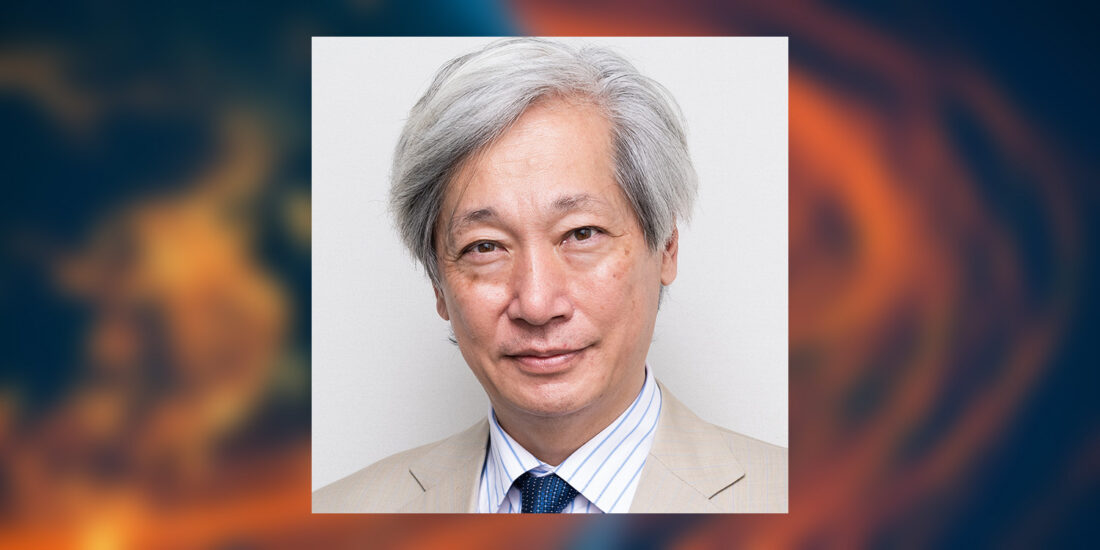
Professor Kiichi Fujiwara of Juntendo University, Japan, will present ‘Globalisation in Retreat’ at The 12th Asian Conference on Education & International Development (ACEID2026), The 16th Asian Conference on Psychology & the Behavioral Sciences (ACP2026), and The 12th Asian Conference on Aging & Gerontology (AGen2026).
As the founder of the Institute for Future Initiatives at the University of Tokyo, Professor Fujiwara has written extensively on the topic of conflict, peacebuilding, and global politics. His keynote presentation will expound on the current shift from globalisation to deglobalisation being felt around the world.
This keynote presentation will be held both onsite in Tokyo, and online via live-stream. To participate in ACEID/ACP/AGen2026 as an audience member, please register for the conference via the conference website.
The presentation will also be available for IAFOR Members to view online as part of their membership benefits. To find out more, please visit the IAFOR Membership page.
Speaker Biography
Kiichi Fujiwara
Juntendo University, Japan
 Kiichi Fujiwara is a Professor in the Graduate School of International Liberal Arts at Juntendo University and Professor Emeritus of the University of Tokyo, Japan. He taught International Politics at the Graduate Schools of Law and Politics and the Graduate School of Public Policy until 2022.
Professor Fujiwara founded the Institute for Future Initiatives at the University of Tokyo, a university think-tank that engages in multidisciplinary approaches to global challenges. His publications include Remembering the War (2001), A Democratic Empire (2002), Is There Really a Just War? (2003), Peace for Realists (winner of the Ishibashi Tanzan award, 2005), International Politics (2007), Conditions of War (2013), A Destabilizing World (2020), and Predatory Imperialism (forthcoming).
Professor Fujiwara is a commentator on international affairs and writes a monthly column for Asahi Shinbun. He is also a film buff, and serves as a film reviewer for the NHK.

Abstract
Globalisation in Retreat
The early twenty-first century marks a decisive shift from the optimism of globalisation we observed in the 1990s to an era of deglobalisation, one defined by geopolitical fragmentation, economic nationalism, and identity politics. This presentation examines the transition from a US-led unipolar and yet international order to an increasingly multipolar world with limited international cooperation, where the United States itself has evolved from a ‘democratic empire’ to a more openly ‘predatory’ one, prioritising strategic advantage over liberal internationalism. Economically, global trade has fractured: the number of trade restrictions surged from roughly 1,000 in 2019 to over 3,000 by 2023, signaling a structural move towards protectionism and regionalisation. Strategic reshoring, supply chain segmentation, and the rise of regional trade blocs have replaced the once seamless global production networks that underpinned globalization’s high point.
This fragmentation extends beyond economics into culture, education, and identity: a deglobalisation of the mind is unfolding as nationalism and nativism shape civic education, emphasising local loyalty over cosmopolitanism. Younger generations—highly connected digitally, yet confined within echo chambers—struggle to balance dual identities: rooted in national belonging while aspiring toward global citizenship. They face ‘responsibility fatigue,’ burdened by global challenges yet constrained by the turn toward economic nationalism and political inwardness.
Despite these trends, opportunities remain. Today’s youth display a distinct capacity for nuanced thinking, capable of reconciling local pride with global responsibility. Understanding how civic education, digital culture, and geopolitical realignment interact in this period of deglobalisation is crucial to envisioning a future that preserves both national agency and shared global accountability.
